

Table of Contents
Share article:
Table of contents
Blog
·
Sep 21, 2026
The Best Air Purifiers for Fall Allergy Season
SE
5.0
Sharper Image Expert
Sharper Image Expert
Hi, I'm an expert on Sharper Image! I guide customers through our products and services with my knowledge and knowhow. Let's talk about Sharper Image!
Fall is supposed to feel like a fresh start — cozy sweaters, pumpkin everything, and crisp morning air. But if you're one of the millions of people who dread ragweed season, you know that "crisp air" can mean something very different: sneezing fits, itchy eyes, and that foggy, congested feeling that follows you from room to room. The good news? The right air purifier can genuinely change the game.
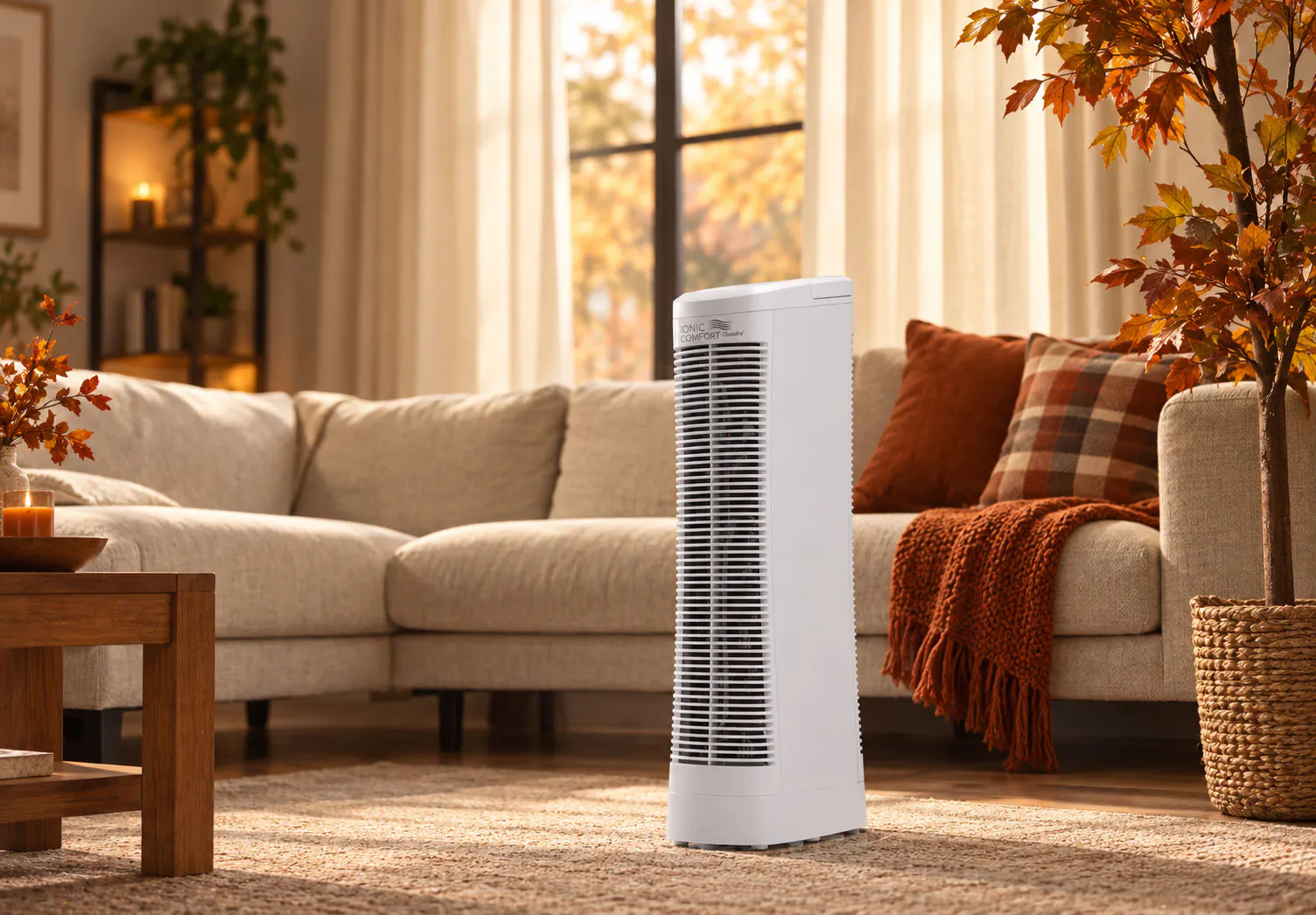
Ionic Comfort Air Purifier by Sharper Image
I've spent a lot of time digging into what actually works when it comes to cleaning indoor air, and I want to cut through the noise for you. Whether you're dealing with fall pollen drifting in through the front door, pet dander stirred up by the change in season, or mold spores from damp autumn leaves, there's a purifier out there that fits your space and your life. Let me walk you through everything you need to know.
Why Fall Allergies Are a Whole Different Beast
Spring gets all the allergy press, but fall is no slouch. If your allergy symptoms flare up in the spring, summer, or fall, you're likely dealing with seasonal pollen — tiny particles from trees, grasses, and weeds that easily find their way into our homes through open windows, doors, and even on our clothes. Once inside, they can linger in the air and wreak havoc on your respiratory system.
Ragweed is the main culprit in fall, and it's remarkably persistent. On top of that, mold spores spike as leaves pile up and decay, and dust mites thrive in the slightly more humid indoor air that comes with closing up the house for the season. It's a perfect storm of irritants — and most of them are invisible to the naked eye.
Here's the thing that surprises a lot of people: your indoor air can actually be worse than outdoor air during allergy season. When you seal up your home against the chill, you're trapping all those particles inside with you. That's exactly where a quality air purifier earns its keep.
What to Actually Look for in an Allergy Air Purifier
Before we get into specific picks, let's talk features — because the marketing language around air purifiers can get confusing fast.
Filtration Technology: HEPA vs. Ionic
Most allergy advice starts and ends with HEPA (High-Efficiency Particulate Air) filters, and for good reason — a True HEPA filter is certified to remove at least 99.97% of particles at 0.3 microns, which covers most of the pollen, dander, and dust that trigger symptoms. It's a well-understood, well-tested standard, and it's a completely reasonable baseline to shop from.
But HEPA isn't the only technology that works — and it isn't the whole story. HEPA filters are mechanical: air passes through a dense mesh that physically traps particles above a certain size. Ionic purifiers work differently. They use charged ions to attract and capture particles, including some ultra-fine particles that can pass through a HEPA mesh entirely. That's the whole premise behind Sharper Image's Ionic Comfort Quadra — the company that pioneered consumer ionic purification decades ago, and a technology built specifically to catch what HEPA leaves behind.
Neither technology is strictly “better” across the board — they just work on the problem from different angles. If you want the most-studied, most conventional option, HEPA is a safe, proven choice. If you want a filter that never needs replacing and targets particles HEPA can't catch, ionic is worth a serious look.
Carbon vs Ionization
HEPA handles particles, but what about odors, gases, and VOCs? That's where activated carbon comes in. An air purifier engineered with HEPA and activated carbon filters can work effectively against pollens, fine particles, Volatile Organic Compounds (VOCs), viruses, and bacteria. If you're burning candles or using cleaning products indoors (which, by the way, you should minimize during allergy season), a carbon filter layer adds meaningful protection.
Ionic purifiers handle odor differently — there's no separate carbon stage, since the ionization process itself neutralizes many odor-causing particles as it charges them. It's a different mechanism, not a missing feature.
Matching Power to Your Space
CADR stands for Clean Air Delivery Rate, and it tells you how quickly a purifier can clean the air in a given room. For best results, look for an air purifier with a true HEPA filter and a clean air delivery rate (CADR) that matches the room or area where you plan to use it. A purifier that's underpowered for your living room is going to work overtime and still underdeliver.
Ionic purifiers are usually rated by room coverage area instead of a CADR number — that's the spec to match to your space if you go that route.
Choosing an air purifier doesn't have to be complicated. Decide which filtration technology fits how you want to maintain it, match the coverage area to your room size, and look for a carbon filter layer if odors are part of the problem. Get those three right, and you're already ahead of 90% of buyers.
Our Top Pick: Ionic Comfort Quadra Air Purifier by Sharper Image
If you want one purifier that handles fall allergy season without the ongoing cost of replacement filters, this is it. The Ionic Comfort Quadra uses advanced ionic technology to remove airborne dust, allergens, mold spores, pet dander, and odors — including ultra-fine particles that traditional HEPA filters can miss entirely.

It's built for real-world use: a permanent aluminum filter that rinses clean in the sink or dishwasher (no filter subscriptions, ever), 9 variable fan speeds, whisper-quiet operation that makes it genuinely fine to run in a bedroom 24/7, and a sleek touch panel that doesn't look out of place in a living room. It's designed for rooms up to 400 sq. ft., so it covers most bedrooms and living rooms without needing a second unit.
-
Advanced ionic technology captures ultra-fine particles HEPA filters can miss
-
Permanent aluminum filter — rinse clean, never buy a replacement
-
9-speed fan with whisper-quiet operation, safe for 24/7 use
-
Covers rooms up to 400 sq. ft.
Best for: Anyone who wants strong, ongoing allergy relief without the recurring cost and hassle of replacement filters
Prefer Traditional HEPA Filtration?
If you'd rather stick with the HEPA standard — or you want UV technology in the mix — the Smart 5‑Stage HEPA and UV‑C Air Purifier is a strong pick. It combines a 4-stage filtration system with a True HEPA H13 filter and activated carbon, plus UV light and a photo-catalyst filter for an extra layer of purification. It's sized for bedrooms, nurseries, and home offices, with Auto, Sleep, and adjustable fan speed modes.
Want to see the full lineup? Browse every HEPA option we carry, in every room size.

How to Get the Most Out of Your Air Purifier This Fall
Even the best purifier needs a little strategy to perform at its peak. Here are the habits that actually move the needle:
Run It Continuously
Keep your air purifier operating 24/7 to maintain consistently clean air, especially during peak allergy seasons. I know it feels counterintuitive to leave an appliance running all day, but air quality isn't a one-and-done situation — particles are constantly being reintroduced into your space.
Placement Matters More Than You Think
Place the purifier in rooms where you spend the majority of your time, such as the bedroom or living room. Your bedroom is especially important — most exposure to dust mite allergens occurs while sleeping and when dust is disturbed during bed-making, so an air purifier in your bedroom can help trap these allergens before they have a chance to settle.
Keep Windows Closed on High-Pollen Days
Keep windows and doors closed while the purifier is operating, particularly when air quality is bad outdoors — such as on high pollen days. I know it's tempting to let in that crisp fall breeze, but on days when pollen counts are elevated, you're undoing a lot of your purifier's hard work every time you crack a window.
Don't Skip the Vacuuming
Air purifiers can reduce airborne allergens, but they do not remove allergens that have settled on surfaces. Using air purifiers alongside regular cleaning — such as vacuuming with HEPA-filter-equipped vacuums — enhances their effectiveness in managing your daily allergy symptoms. Think of your purifier and your vacuum as a team, not substitutes for each other.
A Few More Tips Before You Shop
Vacuum and dust regularly — air purifiers can't remove larger allergens like dust mites and pet hair that settle on surfaces and furniture unless they get disturbed and redistributed into the air. Use a vacuum cleaner with HEPA-certified filtration to clean floors and furniture, and regularly dust with a damp cloth.
Also worth noting: rather than opening windows on warm fall days, try using an air purifier to clean your indoor air and capture ultrafine dust and allergens. It's a simple swap that pays off quickly.
And if you're using heavy cleaning products, paint, or adhesives indoors, give those a rest during allergy season. Limiting the use of chemical-heavy cleaning products and storing house paint, glues, and insecticides away from high-traffic areas reduces the VOC load in your air — which means your purifier can focus on the allergens that are actually bothering you.
The Bottom Line
Fall allergy season doesn't have to mean months of misery. For most people, our top pick is the Ionic Comfort Quadra — ionic technology that catches what HEPA filters miss, with a permanent filter you'll never have to replace. If you'd rather stay with the HEPA standard, any purifier in our HEPA lineup is a great alternative.
Pair whichever you choose with smart habits like continuous operation, strategic placement, and regular vacuuming, and you've built a solid defense against whatever fall throws at you. Your home should be your refuge — especially when the pollen count is through the roof outside.


